
The DRDO has clearly decided that developing technologies is at least as important as developing weapons systems. V K Aatre, DRDO chief from 2000-04, had said, "Weapons programmes and technologies have to maintain equal pace." Only now is the DRDO heeding his advice.
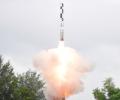
India has already deployed a sizeable number of the original BrahMos missiles and other key assets in several strategic locations along the de-facto border with China in Ladakh and Arunachal Pradesh.

A six-inch pipe has been laid at the Silkyara tunnel through which nutritious food and medicines could be supplied to the 41 labourers, trapped for over a week after parts of the under-construction structure collapsed following a landslide.
India is ready to export missiles to countries whose names are cleared by the government, top DRDO scientist S Prahlada has said, disclosing that trade inquiries have been received from at least five nations. Though Prahlada did not name the missiles, which could be offered in world market but sources said that India could place Indo-Russian supersonic cruise missile Brahmos and recently tested surface-to-air missile Akash for sale.

The IED that triggered a low-intensity explosion in courtroom number 102 on December 9 had left a person injured.
The K-15 missile, which has a range of 700 km, was test-fired from an undersea launcher.

These unmanned aerial vehicles can fly at high speeds, detect intruders, do aerobatic maneuvers like loops, rolls, spins, and hammerheads effortlessly and communicate with each other intelligently.

With a combination of both physical and virtual exhibition, the 13th edition of the biennial international event at Air Force Station Yelahanka will be the world's first hybrid aerospace show.
Tactical systems such as main battle tank Arjun, light combat aircraft Tejas, a family of radars, electronic warfare systems, sonars, torpedoes, armaments and missiles have been successfully developed in the country and many of them are being delivered to the armed forces. The recent success of the DRDO (Defence Research and Development Organisation) in the launch of interceptor missile and Agni-III has taken our country into the elite club of a few developed nations.
Prime Minister Narendra Modi had hoisted the national flag and addressed the nation from the ramparts of the Red Fort. He said that it was an occasion to remember freedom fighters who laid down their lives for the freedom of the country.
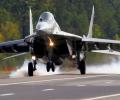
The procurement will come at a cost of Rs 38,900 crore.
The failure of the BrahMos missile during a recent test was due to a "software glitch" and the Defence Research and Development Organisation is doing a number of simulations and tests to ensure that it does not recur, A Sivathanu Pillai, Chief Executive Officer of the BrahMos Aerospace, said on Monday.

'How can a State, which claims to be a responsible power, unilaterally grab a "disputed" area to build a road on it?' asks Claude Arpi.
The robot, fitted with a camera and an X-ray film, could carry and defuse a bomb weighing up to 20 kg from a distance of 500 metres.
State-run Kerala High-tech Industries Ltd (KELTEC) is all set to become part of the Indo-Russian joint venture cruise missile project, BrahMos Aerospace.
The army confirmed that they will buy 12 Nishant Unmanned Aerial Vehicle for reconnaissance and surveillance operations, a top Defence Research and Development Organisation official said on Friday.

This the second time that the missile has been test-fired in less than a month and is part of an effort to put in place a multi-layer missile defence system.
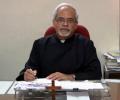
Amid allegations of attempts to hush up a molestation row in St Stephen's College, its principal Valson Thampu on Saturday said it was not for him but the victim to go to police.
Scientists at the Leh-based Regional Research Laboratory have cross-bred the region's famous yaks with high yielding Swiss cows to produce a new breed, which can withstand extremely high altitudes.

India on Monday successfully test-fired its indigenously developed nuclear capable Prithvi-II missile, which has a strike range of 350 km, as part of a user trial for the defence forces.

France has asked India for early finalisation of the long-pending Rs 30,000-crore project for joint production of short-range surface-to-air missile (SR-SAM) systems.
The bone of contention is the 450-seat convention centre built in the new DRDO building behind South Block at an additional cost of Rs 6.40 crore which has been taken objection to by the Comptroller and Auditor General.

The HSTDV is capable of powering missiles to attain a speed of around Mach 6 or six times the speed of sound, the officials said, adding only a very few countries like the United States, Russia and China have such a capability.
This is the first of a four-part series on the DRDO, which has instituted fundamental changes in the way it will approach equipment development.

Agni-V is a three stage missile, 17 metres tall, two metres wide and capable of carrying 1.5 tonne of nuclear warheads.
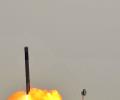
India on Tuesday test-fired an advanced version of the 290-km range BrahMos supersonic cruise missile from the Odisha coast. The missile was test-fired from a mobile launcher from the Integrated Test Range at Chandipur at about 10.40 am, Defence Research and Development Organisation said.
The Defence Research and Development Organisation (DRDO) has prepared the design of the aircraft while HAL is producing the engine and other parts.
A drug developed by the Defence Research and Development Organisation (DRDO) may reverse the heart damage caused by a protein in the SARS-CoV-2 virus, a study conducted in fruit flies and mice has found.
For the second time in a month, the Block II version of the supersonic BrahMos cruise missile with a striking range of 290 km, successfully hit its target during a test at the Pokhran firing range on Sunday. After today's test, officials said the development phase of the Block II version of the missile was over and it was ready for induction in the Army. They said the mission objectives of the test had been completely fulfilled.
A day after the BrahMos missile was test-fired, the Defence Research and Development Organisation on Tuesday said there were some minor hitches during the trial. The problems occurred in the last stage of the test, which was conducted in the Pokhran ranges of Rajasthan on a new version of BrahMos missile on Tuesday, DRDO officials said.

The company will supply the drug to major government as well as private hospitals across India, Dr Reddy's said in a regulatory filing.

On Friday, Biden announced his intent to appoint 14 people to the advisory committee, which provides overall policy advice to the United States trade representative on matters of development, implementation, and administration of the US trade policy.
The main objectives of test-firing were to validate safe separation of the missile from the parent aircraft, effect of missile plume on engine air-intake, functionality of store management system, including safety interlocks, effect of missile plume on composites structures and handling quality assessment during missile launch.
The Centre for Airborne Systems, DRDO's Bangalore-based unit, has revived the airborne early warning system programme, which was scrapped in 1999 following a crash of the rotodome radar-fitted Avro aircraft near Arakkonam in Chennai.
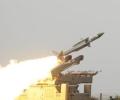
India today successfully test fired indigenously-developed surface-to-air Akash missile with a strike range of 25 km and capability to carry warhead of 60 kg from the Integrated Test Range at Chandipur as part of a user-trial.
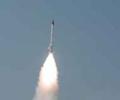
India on Sunday successfully test-fired a new interceptor missile capable of neutralising any incoming long-range missile at higher altitude.

The Indian Army will showcase the main battle tank T-90 Bhishma, infantry combat vehicle BMP-II-Sarath, mobile autonomous launcher of the Brahmos missile system, multi-launcher rocket system Pinaka, electronic warfare system Samvijay among others during the parade on Tuesday, the Defence ministry noted.
BrahMos is unique among cruise missiles due to its 2.8 Mach supersonic speed (all other cruise missiles are sub-sonic at present) and much-longer strike range.

More and more women are making their presence felt in jobs related to sciences, technology, and engineering across organisations.
 © 2026 Rediff.com - Advertise with us - Disclaimer - Privacy Policy - Sitemap - Feedback - About us - Terms of use - Grievances